October 17, 2026
CW Keys: Straight Key, Paddle or Bug? How to Choose
A practical comparison of CW keys: straight keys, sideswipers, bugs, single and dual paddles with electronic keyers, plus advice on setup and…
Read more →A practical comparison of CW keys: straight keys, sideswipers, bugs, single and dual paddles with electronic keyers, plus advice on setup and…
Read more →A realistic G5RV antenna guide: dimensions, how the matching section works, band-by-band behaviour, balun and tuner choices, 160 m limits and common…
Read more →What AllStarLink is, how nodes, hubs and node numbers work, what hardware and software ASL3 needs, and how to connect with DTMF…
Read more →What an AREDN mesh network is, which bands and hardware it uses, how topologies and links work, and how to plan a…
Read more →A practical JS8Call guide: how the JS8 mode works, speeds, suggested HF frequencies, heartbeats, directed messages, relays and first-time setup tips.
Read more →What the CTY.DAT country file holds, why logging programs need it, how to update it in N1MM, WSJT-X, Fldigi and Win-Test, and…
Read more →A practical Direwolf guide: how a soundcard TNC replaces hardware, what it can do for APRS and AX.25 packet, modems, hardware, setup…
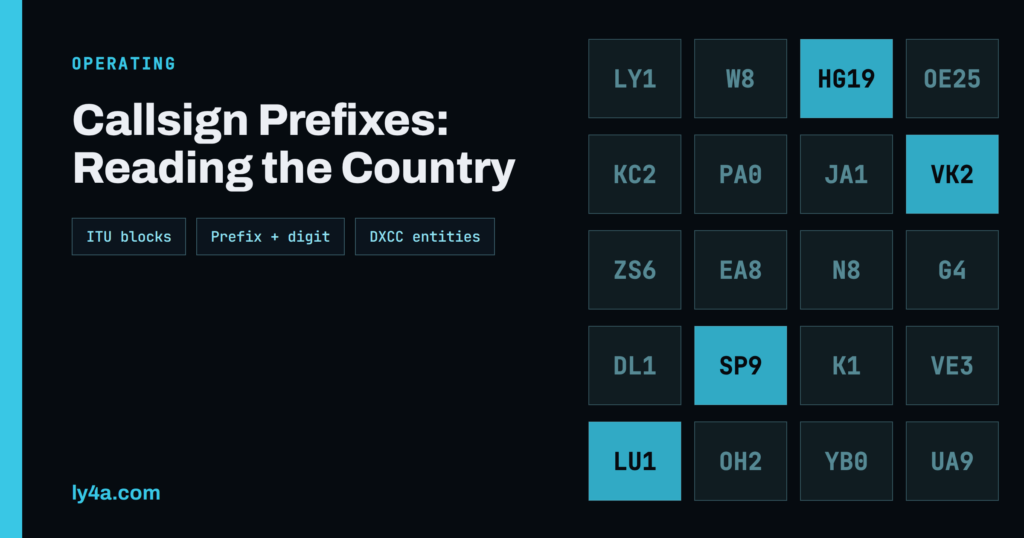
Read more →How callsign prefixes work: ITU blocks, call sign structure, portable and CEPT forms, special event calls and why a prefix is not…
Read more →How to read a MUF map and foF2 data from ionosondes: what the numbers mean, which bands are open, how fresh the…
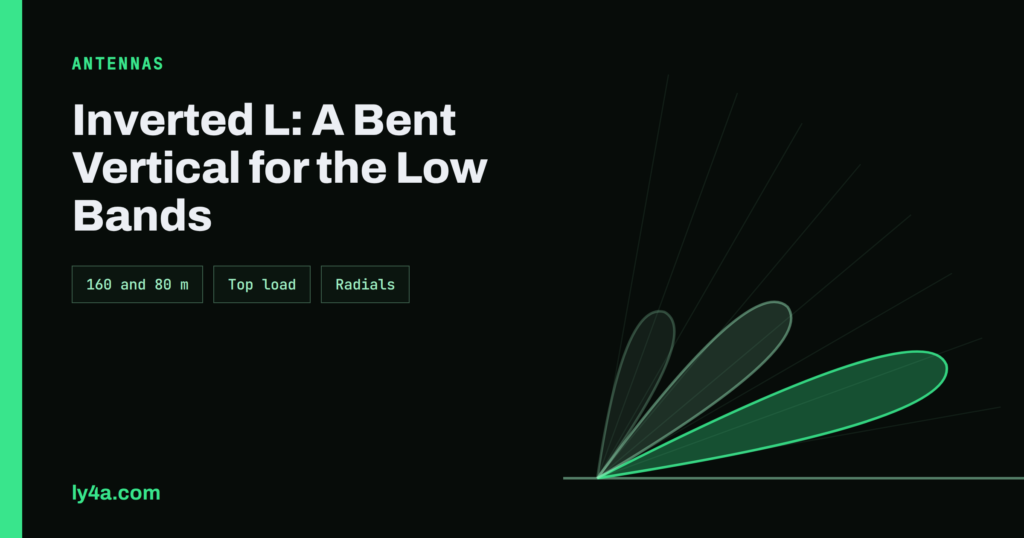
Read more →A practical inverted L antenna guide for 160 and 80 meters: how it works, wire lengths, radials, feeding and matching, tuning and…
Read more →LY4A is made by Internet Solutions. Try the rest of our products — each one saves you time in a different way.