October 18, 2026
Stacked Yagis: Gain, Spacing and Switching for Contest Stations
Stacked Yagis explained: how stacking adds gain, how spacing and phasing lines work, why stack switching helps and what it costs in…
Read more →Stacked Yagis explained: how stacking adds gain, how spacing and phasing lines work, why stack switching helps and what it costs in…
Read more →CHIRP radio programming made practical: connect a handheld, back up the radio, import repeaters from RepeaterBook, edit memories and upload them safely.
Read more →A practical push-up mast guide for wire antennas: choosing a mast, guy ring placement, anchors, rope, raising it safely and keeping clear…
Read more →Band-pass filters explained for multi-station contest and Field Day sites: why stations interfere, what filters fix, what they cannot, and how to…
Read more →Radio aurora explained for VHF operators: how auroral backscatter works, which bands and modes suit it, how to read Kp, aim your…
Read more →Direct sampling SDR vs superheterodyne receivers for hams: how each design works, where the ADC limits dynamic range and what to check…
Read more →A guide to the 630 meter band and the 2200 meter band: allocations, power limits, ground wave propagation, QRSS, antennas, noise and…
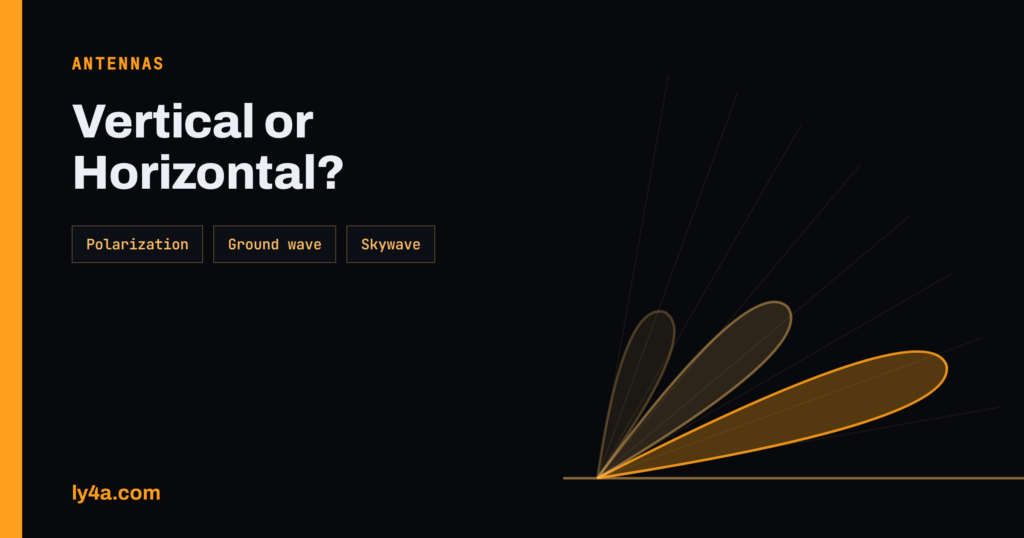
Read more →Vertical vs horizontal polarization explained for hams: ground wave, HF skywave, VHF and UHF, satellites, mismatch loss and how to choose your…
Read more →What CTCSS tones and DCS codes do on repeaters, how they differ from carrier squelch and tone burst, why 100 Hz is…
Read more →How to use Gpredict for amateur satellite passes: ground station, TLE updates, modules, polar plots, Doppler tuning and rotator control through Hamlib.
Read more →LY4A is made by Internet Solutions. Try the rest of our products — each one saves you time in a different way.